Know what your home project really costs.
CostMyHome turns contractor pricing into a clear, range-based estimate for common renovations and replacements — in about a minute, before you ever pick up the phone.
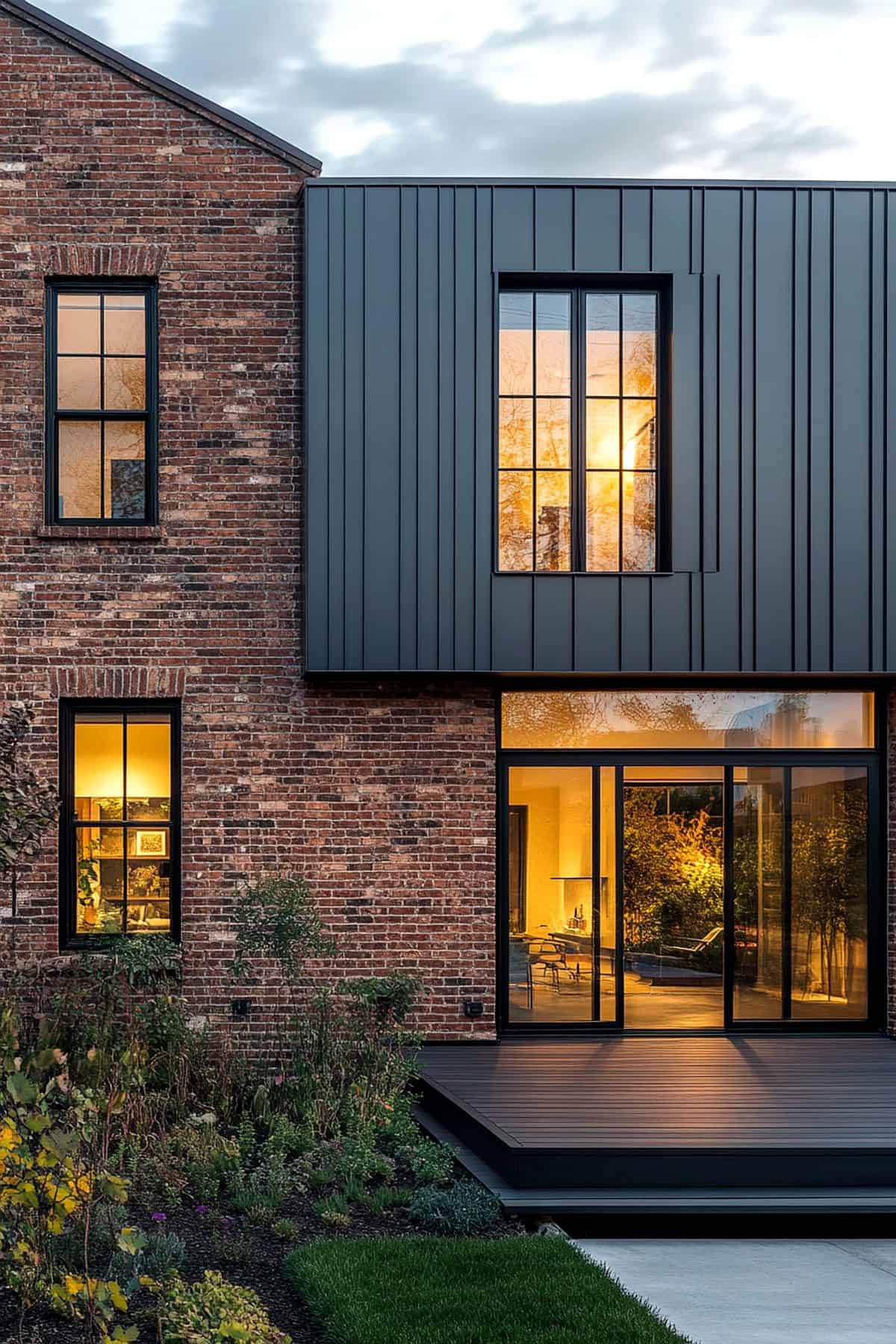 Typical project range: $900 – $100,000
Choose a calculator
Five live estimators, each tuned to that trade's real cost drivers. Every one returns a realistic low-to-high range, a typical figure, and a line-by-line breakdown you can bring to a contractor.
How an estimate works
A real quote depends on dozens of variables. We model the ones that move the price most, then give you a band — because any contractor quote that lands on a single exact number is a guess.
Pick a project
Start with any of the five estimators — water heater, roof, bathroom, kitchen or HVAC. Each is tuned to that trade's real cost drivers.
Set your details
Choose the unit type, size and extras that match your home. Every change updates the estimate instantly.
Get your range
See the low-to-high band, the typical figure and a line-by-line breakdown you can compare against quotes.
Where do these numbers come from?
Every estimate starts from a documented methodology — national benchmarks, regional labor factors and trade-specific cost drivers — so you can trust the range you're given.
Cost guides, with sources
Ten data-backed guides — national ranges, what moves the price, and how your state compares. Every number traces to a published source.
Planning a project in any state?
Our programmatic engine adjusts every estimate to your local labor market — the same engine that will publish a dedicated cost page for each state × project combination.
Water heater replacement cost
The typical homeowner spends $1,700 to replace a 50-gallon tank unit, installed. Tankless and heat-pump units run higher. This estimator builds your range from 2025–2026 U.S. market data — unit price, labor, permits and your state's labor market.
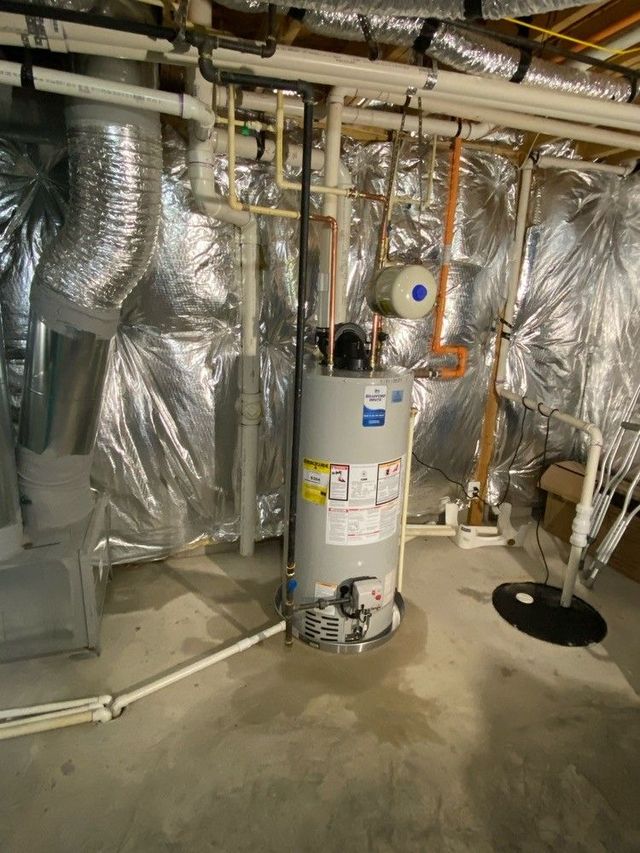 Gas tank unit in a basement utility room
Your project details
Estimated cost
| Line item | Range |
|---|
What moves the price
Three factors account for most of the difference between a low and high quote.
Unit type
Tank units are cheapest up front. Tankless costs more but lasts 5–10 years longer. Heat pumps cost the most but qualify for rebates in many states.
Labor & permits
Installation labor runs $300–$900 and permits $50–$150. Most municipalities require a permit for replacement — a contractor who skips it passes the risk to you.
Where you live
Coastal and high-cost states add 10–15% to labor. Our state factor adjusts the estimate to your local market.
Common questions
Does this include installation?
Yes. Every line — unit, labor, permit, disposal and extras — is installed pricing. The range is what you should expect a licensed plumber to quote.
Gas or electric — does it matter?
Yes, and the estimator accounts for it: tankless gas units need venting, which raises labor. If you're unsure which fuel your home uses, check the pipe or breaker serving the existing unit.
Why a range instead of one number?
Real quotes vary with your home's piping, venting and local demand. A single number would be a guess. The band shows you a fair market range; the typical figure is the midpoint.
Roof replacement cost
A typical 1,800 sq ft home with architectural asphalt shingles runs $11,700 installed. Material choice moves the price more than anything else — metal and tile can double or triple it.
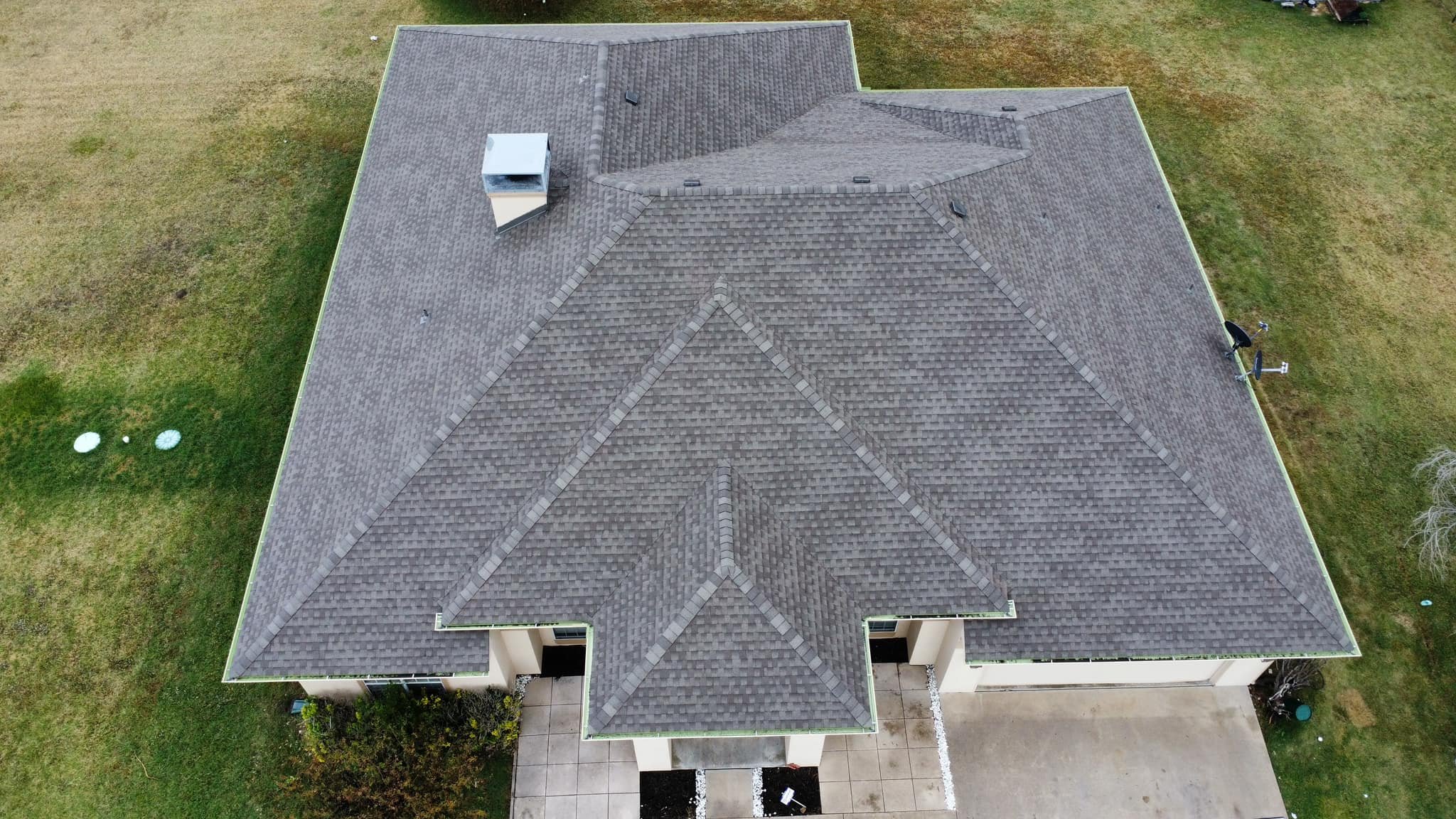 Architectural asphalt shingles on a modern residential roof
Your project details
Estimated cost
| Line item | Range |
|---|
What moves the price
Material choice, roof size and access are the three biggest cost drivers.
Material
Architectural asphalt runs $4.50–$8.50 per sq ft installed. Metal is $8–$16; tile is $10–$25. Asphalt is the budget pick; metal and tile buy decades of extra life.
Size & pitch
Every extra 100 sq ft adds roughly $450–$850. Steep roofs slow crews and add 10–15%. Two stories add another 10% for staging and safety.
Tear-off & decking
Most quotes include tearing off one layer. Rotting sheathing, new gutters or skylights are add-ons — ask for them in writing so the final bill matches the quote.
Common questions
Does the price include removing the old roof?
Yes — the base estimate includes tear-off and haul-away of one layer of shingles. If a previous roof already sits on top, removal of the extra layer adds cost.
Is insurance ever involved?
Yes. Storm or hail damage is often covered by homeowners insurance. Your deductible applies, and the roofer can help document the claim — but always get the estimate before signing anything.
How long does a roof last?
3-tab asphalt lasts 15–20 years, architectural asphalt 25–30, metal 40–60 and tile 50+. The longer the life, the higher the upfront price per sq ft.
Bathroom remodel cost
A mid-range remodel of a standard bathroom runs $14,000 — the most common budget for homeowners who want a genuine transformation without moving plumbing.
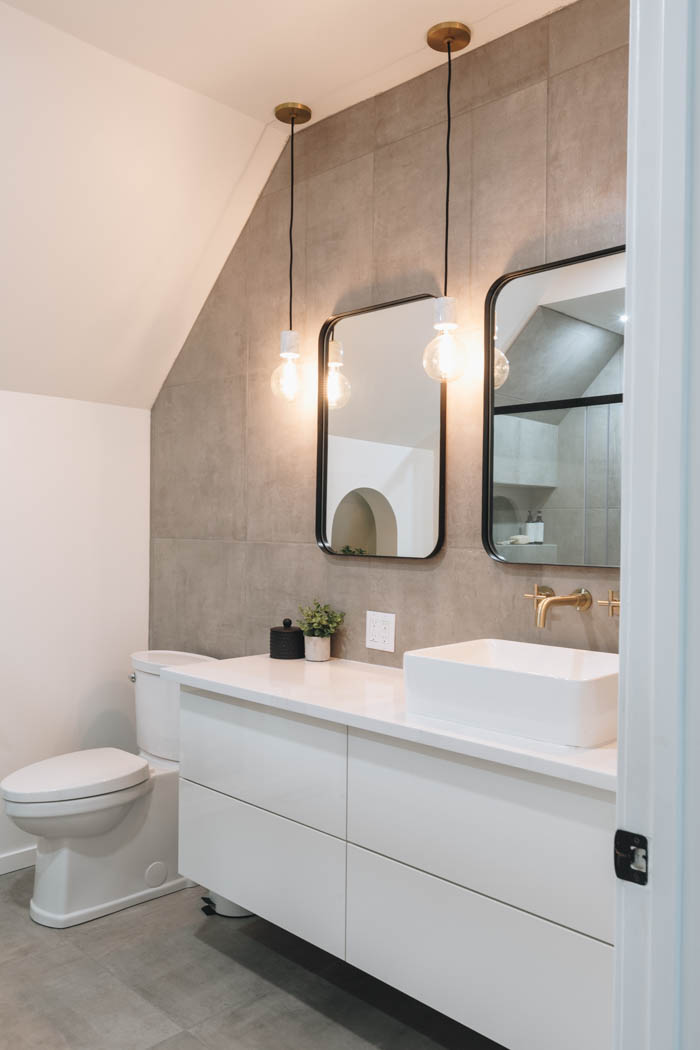 Mid-range remodel: new tile, vanity and fixtures
Your project details
Estimated cost
| Line item | Range |
|---|
What moves the price
Scope, size and plumbing location decide most of the difference between bids.
Scope
A refresh is paint and fixtures at $3,000–$7,500. Mid-range replaces tile, vanity and fixtures for $8k–$20k. A full gut — walls, plumbing, everything — runs $20k–$45k.
Size & plumbing
Larger rooms scale materials and labor up roughly 30%. Moving a toilet or shower, or converting a tub to a walk-in shower, adds $1,500–$3,500 in plumbing work.
Tile & fixtures
Tile is the biggest material line: $5–$30 per sq ft installed depending on type. Fixtures — vanity, faucets, toilet, lighting — typically run $1,500–$4,000 in a mid-range job.
Common questions
Does this include a licensed contractor?
Yes — the range reflects a licensed general contractor or bathroom remodeler, including labor, materials and disposal. DIY saves on labor but adds risk on plumbing and waterproofing.
What's the return on investment?
A mid-range bathroom remodel recovers roughly 80% of its cost at resale (JLC 2025 Cost vs. Value) — among the highest returns of any interior project, which is why it's worth doing right.
Why is the range so wide?
Tile choice alone spans 6× in price. Add plumbing moves, waterproofing methods and regional labor and two identical-looking bathrooms can legitimately quote 60% apart.
Kitchen remodel cost
A mid-range remodel of a standard kitchen runs $32,500 — the most common budget for homeowners who want new cabinets, counters and appliances without moving walls.
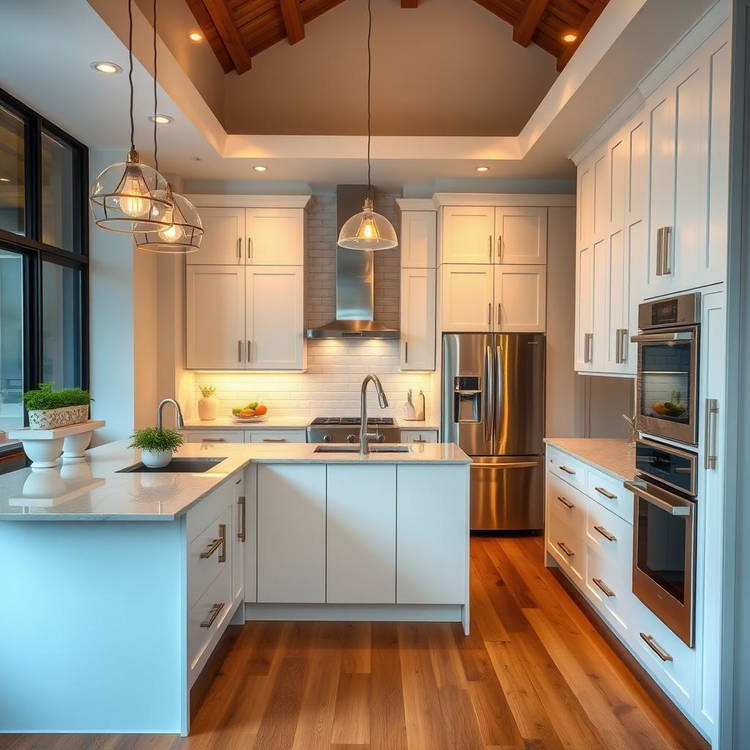 Mid-range remodel: white cabinetry, island and new appliances
Your project details
Estimated cost
| Line item | Range |
|---|
What moves the price
Cabinets, countertops and scope decide most of the difference between bids.
Cabinetry
Cabinets are the single largest line — 30–40% of a mid-range budget. Stock cabinets keep costs down; semi-custom and custom build the gap to a full-gut number.
Counters & appliances
Laminate counters run $1,500–$3,000; quartz or granite add $2,000–$5,000. A standard appliance suite is included in the base; premium brands are an extra.
Scope & layout
Moving plumbing, gas lines or walls pushes a remodel into full-gut territory. Adding an island costs $2,000–$4,500 in base, labor and electrical.
Common questions
Does this include a licensed contractor?
Yes — the range reflects a licensed general contractor, including labor, materials, demolition and disposal. DIY saves on labor but adds risk on electrical, plumbing and gas work.
What's the return on investment?
A minor kitchen remodel recovers over 100% of its cost at resale in most markets (JLC 2025 Cost vs. Value); major mid-range remodels average about 50%. It's the project buyers notice first — doing it well matters.
Why is the range so wide?
Cabinetry alone spans 3–4× in price from stock to custom. Add countertop material, appliances and layout changes, and two kitchens that look similar can quote 60% apart.
HVAC replacement cost
Replacing a furnace and central AC together in a 1,500–2,500 sq ft home runs $10,300 installed. A heat pump is the modern alternative, often with utility incentives that close the gap.
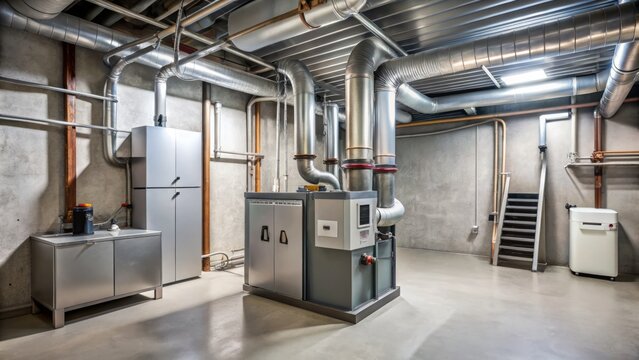 High-efficiency gas furnace with new ductwork
Your project details
Estimated cost
| Line item | Range |
|---|
What moves the price
System choice, efficiency tier and ductwork condition account for most of the spread.
System choice
A furnace alone runs $4,000–$9,000; central AC alone $3,500–$8,000. Replacing both together is the best value per dollar — $7,500–$13,000 installed.
Efficiency tier
High-efficiency units (95%+ AFUE, 16+ SEER) cost about 15% more up front but cut energy bills for the 15–20 year life of the system.
Ductwork & sizing
A proper load calculation is non-negotiable — oversized units short-cycle and waste money. Existing ductwork that needs repair adds $1,000–$3,000.
Common questions
Does this include installation and permits?
Yes — equipment, labor, permits, refrigerant and disposal are included. Most jurisdictions require a permit for system replacement, and a licensed contractor handles it.
Heat pump or furnace + AC?
Heat pumps handle both heating and cooling at $8,000–$16,000 and are electric-only, which matters where gas lines are absent or incentives are strong. In very cold climates a furnace may still be the better fit.
Are rebates included in the estimate?
No — the range is before incentives. Federal and state programs, plus utility rebates, can cover $500–$8,000 of a high-efficiency or heat-pump install. Check current programs for your state.
Home improvement costs by state
Select a state to see typical costs and realistic ranges for all five projects, adjusted to that state's labor market. Every state × project combination is derived from the same 2025–2026 national data and regional cost indexes, and each pair becomes its own indexed cost page in Phase 2.
How the engine works
Every state page starts from the same five cost models you see in the calculators. A regional labor factor adjusts the labor share of each estimate — roughly 100% of a water-heater job, but about 50% of a roof and 45% of a bathroom or kitchen. Materials are priced nationally; labor varies locally.
State factors range from 0.92 (low-labor-cost South) to 1.25 (high-cost metros) and are derived from published regional indexes — HomeAdvisor renovation averages by city, FindPros regional bands and trade labor-rate guides. The engine — model × factor × page generator — is what ships in Phase 2, with per-state data sets replacing the representative tiers.
Home renovation costs by city
Typical costs for all five projects in 181 U.S. cities — from the biggest metros to smaller markets — adjusted to each city's labor market. Start with a major metro below, or find your city in the full list.
Where these come from
Every city page runs the same cost model as our calculators, with a city-level labor factor. Major metros use published HomeAdvisor renovation averages; other cities are anchored to their state labor factor and adjusted by cost-of-living tier. Materials are priced nationally — labor is what moves city to city.
Each city has a dedicated page per project — roof replacement in Austin, water heater in Buffalo — with its own URL, price table and comparison to the national average.
Get matched with local pros
You now know what your project should cost. Next step: get 3 comparable bids from vetted local contractors — and compare material prices before you commit.
What happens next
Tell us your project
Project type, your state and rough scope. One form, five project types.
Get matched
We route you to vetted local contractors in our network — screened, licensed and rated.
Compare bids
Use your CostMyHome range to check each quote line by line. Nothing is a good deal if it's missing line items.
Request quotes
Prototype: quote routing and affiliate links arrive in Phase 2. Your details are never stored.
Material deals we'll track
Once live, this page also compares material pricing with affiliate partners (Home Depot, Lowe's, Amazon) for the items in your estimate — water heaters, shingles, tile, appliances. You'll see current prices next to the ranges our calculators assume.
Why three bids?
Quotes for the same project routinely vary by 30%. The contractor at the bottom isn't necessarily cheap — they may have left off permits, disposal or a line item you'll pay for later. Compare line items against your CostMyHome range, not totals.
Home improvement cost guides
Ten data-backed guides built from the same 2025–2026 national benchmarks as our calculators — national ranges, what moves the price, and how your state compares. Every guide ends with a live estimator.
Compare & choose
Save money & understand value
How these guides work
Each guide starts from published national data (Angi, HomeAdvisor, HomeGuide, Fixr and trade cost reports, 2025–2026), states the installed range for the main options, then applies our state labor factors for a local picture. Sources are listed at the bottom of every guide — no anonymous numbers.
How much does a water heater replacement cost?
National data for 2025–2026 puts a like-for-like tank replacement at $900–$2,300 installed, with tankless and heat-pump units running higher. Most homeowners pay about $1,700 for a standard 50-gallon tank, fully installed.
Cost by unit type (installed, national)
| Unit type | Installed range | Notes |
|---|---|---|
| Tank · 40 gallon | $900 – $2,100 | Cheapest option; best for 1–2 people |
| Tank · 50 gallon | $1,000 – $2,300 | Most common replacement size |
| Tank · 75 gallon | $1,300 – $2,700 | For larger households |
| Tankless (on-demand) | $1,700 – $4,200 | Lasts 20+ years; needs gas line / venting work sometimes |
| Heat pump (hybrid) | $2,200 – $5,000 | Most efficient; check state rebates before buying |
What moves the price
- Labor runs $300–$900 and depends on your area and access — the biggest variable after the unit itself.
- Fuel and venting: switching from electric to gas, or installing a power-vent tankless, adds $400–$1,500 in line and venting work.
- Permits run $50–$150 in most jurisdictions; disposal of the old unit adds $50–$150.
Cost by state (typical, 50-gallon tank)
| State | Typical cost | vs. national |
|---|---|---|
| California / New York / Massachusetts | $1,800 | +6% |
| Illinois / Pennsylvania | $1,700 | national |
| Ohio / Michigan | $1,700 | national |
| Florida | $1,600 | −6% |
| Texas / Georgia / Tennessee | $1,600 | −6% |
Repair or replace?
If the tank is under 10 years old and leaking from a fitting (not the tank), a $150–$400 repair may be enough. Past 10–12 years, replacement is the better money — a tank failure floods quickly, and water damage costs far more than the unit.
How much does a roof replacement cost?
A typical 1,800 sq ft home with architectural asphalt shingles runs $8,100–$15,300 installed, about $11,700 on average. Material choice moves the price more than any other decision.
Cost by material (installed, includes tear-off)
| Material | Per sq ft | Typical total, 1,800 sq ft roof |
|---|---|---|
| Asphalt · 3-tab | $3.50 – $5.50 | $6,300 – $9,900 |
| Asphalt · architectural | $4.50 – $8.50 | $8,100 – $15,300 |
| Metal · standing seam | $8.00 – $16.00 | $14,400 – $28,800 |
| Tile · clay or concrete | $10.00 – $25.00 | $18,000 – $45,000 |
What moves the price
- Pitch and stories: steep roofs add 10–15%; two stories add ~10% for staging and safety.
- Tear-off layers: one layer of old shingles is normally included. A second layer, or rotted sheathing, adds $1,500–$3,000.
- Extras: new gutters $1,000–$1,800, skylights $800–$1,500 each.
Cost by state (typical, architectural shingles)
| State | Typical cost | vs. national |
|---|---|---|
| California / New York / Massachusetts | $13,200 | +13% |
| Illinois / Pennsylvania | $12,000 | +3% |
| Ohio / Michigan | $11,700 | national |
| Florida | $11,500 | −2% |
| Texas / Georgia / Tennessee | $11,200 | −4% |
Insurance and storms
Hail or wind damage is often covered by homeowners insurance — your deductible applies. Get the contractor's estimate and documentation before signing anything, and never let a "storm chaser" pressure you into a same-day contract.
How much does a bathroom remodel cost?
A mid-range remodel of a standard bathroom runs $8,000–$20,000, about $14,000 on average — consistent with Angi and HomeAdvisor 2025 national data. Scope, not size, is the biggest cost driver.
Cost by scope (national)
| Scope | Installed range | What you get |
|---|---|---|
| Refresh | $3,000 – $7,500 | Paint, fixtures, hardware — plumbing stays put |
| Mid-range | $8,000 – $20,000 | New tile, vanity, toilet, lighting, fixtures |
| Full gut | $20,000 – $45,000 | To the studs: plumbing moves, layout, premium materials |
Size matters, less than you'd think
Moving a toilet or shower is where costs explode — plumbing relocations run $1,500–$3,500. Room size scales the estimate by about 15–30% (small ×0.85, large ×1.30 in our calculator), but keeping fixtures in place saves more than downsizing.
Cost by state (typical, mid-range)
| State | Typical cost | vs. national |
|---|---|---|
| California / New York / Massachusetts | $15,600 | +11% |
| Illinois / Pennsylvania | $14,300 | +2% |
| Ohio / Michigan | $14,000 | national |
| Florida | $13,800 | −1% |
| Texas / Georgia / Tennessee | $13,500 | −4% |
Is it worth it?
JLC's 2025 Cost vs. Value report puts the resale return of a mid-range bathroom remodel at roughly 80% — among the highest of any interior project. It's the rare renovation that pays for most of itself when you sell.
How much does a kitchen remodel cost?
A mid-range kitchen remodel runs $20,000–$45,000, about $32,500 on average — consistent with Fixr and HomeLight 2025–2026 national data. Refreshes start around $8,000; full gut renovations run $45,000–$80,000.
Cost by scope (national)
| Scope | Installed range | What you get |
|---|---|---|
| Refresh | $8,000 – $20,000 | New counters, backsplash, hardware; cabinets stay |
| Mid-range | $20,000 – $45,000 | New cabinets, counters, appliances, lighting |
| Full gut | $45,000 – $80,000 | Layout changes, new plumbing/electrical, premium materials |
Cost by state (typical, mid-range)
| State | Typical cost | vs. national |
|---|---|---|
| California / New York / Massachusetts | $36,200 | +11% |
| Illinois / Pennsylvania | $33,200 | +2% |
| Ohio / Michigan | $32,500 | national |
| Florida | $32,100 | −1% |
| Texas / Georgia / Tennessee | $31,300 | −4% |
What moves the price
- Cabinets are the biggest line item, 30–40% of the budget. Imported cabinet tariffs are now in effect and rise to 50% in January 2027 — expect prices to keep climbing.
- Layout changes are what push a job into full-gut territory. Moving a sink or island costs $2,000–$4,500 in plumbing and electrical alone.
- Appliances: a standard suite runs $3,000–$8,000; premium brands push past $15,000.
Is it worth it?
A minor kitchen remodel recovers over 100% of its cost at resale in most markets (JLC 2025 Cost vs. Value); major mid-range remodels average about 50%. It is the project buyers notice first.
How much does a new HVAC system cost?
Replacing a furnace and central AC together in a 1,500–2,500 sq ft home runs $7,500–$13,000, about $10,300 on average. A heat pump is the modern alternative at $8,000–$16,000, often with state and utility incentives.
Cost by system (national, medium home)
| System | Installed range | Notes |
|---|---|---|
| Furnace only | $4,000 – $9,000 | Gas, 80–96% AFUE |
| Central AC only | $3,500 – $8,000 | 14–16 SEER2 |
| Furnace + AC | $7,500 – $13,000 | Best value per dollar |
| Heat pump | $8,000 – $16,000 | Heating and cooling in one; check rebates |
Cost by state (typical, furnace + AC)
| State | Typical cost | vs. national |
|---|---|---|
| California / New York / Massachusetts | $11,500 | +12% |
| Illinois / Pennsylvania | $10,500 | +2% |
| Ohio / Michigan | $10,300 | national |
| Florida | $10,100 | −2% |
| Texas / Georgia / Tennessee | $9,800 | −5% |
Efficiency and incentives
High-efficiency units (95%+ AFUE, 16+ SEER2) cost about 15% more up front and pay back in monthly bills. Note: the federal 25C tax credit ended on December 31, 2025 — check state and utility rebates instead; many states now run income-based electrification programs that can cover thousands of dollars.
Tankless vs tank water heater: which is cheaper?
A tank heater is cheaper to buy and install ($1,000–$2,300 vs $1,700–$4,200 tankless), but a tankless unit lasts twice as long and saves 10–20% on water-heating energy. The right choice depends on how long you'll stay in the home.
Side by side
| Tank (50 gal) | Tankless | |
|---|---|---|
| Installed cost | $1,000 – $2,300 | $1,700 – $4,200 |
| Lifespan | 10–12 years | 20+ years |
| Energy use | Base (keeps 50 gal hot 24/7) | 10–20% less |
| Hot water | Runs out in long showers | Endless (with right sizing) |
| Maintenance | Flush yearly; anode rod every few years | Flush yearly; descale |
| Install extras | None typical | Gas line, venting, condensing drain: $400–$1,500 |
Which should you buy?
- Staying 10+ years: tankless usually wins on total cost of ownership — the extra upfront cost is repaid in energy savings and a second unit never bought.
- Staying less than 10 years: buy the tank. The payback period rarely beats your horizon.
- Big family / long showers: a properly sized tankless (or a heat-pump tank) beats a tank that runs cold mid-shower.
Don't forget the heat pump option
A heat-pump (hybrid) water heater costs $2,200–$5,000 installed but is 2–3× more efficient than a standard tank — the best lifetime value if your space and climate allow it.
Metal vs asphalt roof: cost and lifespan compared
Asphalt is the budget pick at $4.50–$8.50/sq ft installed; standing-seam metal runs $8–$16/sq ft. But metal lasts 40–70 years vs 15–30 for asphalt — for a long-horizon homeowner, metal can be cheaper per year of life.
Side by side
| Architectural asphalt | Standing-seam metal | |
|---|---|---|
| Cost / sq ft | $4.50 – $8.50 | $8 – $16 |
| 1,800 sq ft roof | $8,100 – $15,300 | $14,400 – $28,800 |
| Lifespan | 15–30 years | 40–70 years |
| Maintenance | Low; granules shed over time | Very low; repaint joints occasionally |
| Insurance | Standard | Often discounts (hail/wind) |
| Weight | Lighter, easy install | Light; works over old layers sometimes |
Which should you buy?
- Budget now, plan to move: asphalt. It looks great for its first decade and costs half as much.
- Long-term ownership: metal. Total cost per year is often lower — $14,400–$28,800 once, vs. asphalt twice in 50 years.
- Hail and wind zones: metal resists impact better and often earns an insurance discount.
What changes the price
Pitch and stories add 10–15% each tier; a second tear-off layer adds $1,500–$3,000; and metal with concealed fasteners or stone coating costs more than the base range.
Heat pump vs furnace + AC: which should you buy?
A split system (furnace + AC) runs $7,500–$13,000 installed; a heat pump runs $8,000–$16,000. The heat pump heats and cools from one unit, is more efficient, and often qualifies for state rebates — but in very cold climates a furnace may still fit better.
Side by side
| Furnace + AC | Heat pump | |
|---|---|---|
| Installed cost | $7,500 – $13,000 | $8,000 – $16,000 |
| Heating | Gas or electric furnace | Electric (reverse-cycle) |
| Cooling | Separate AC | Same unit |
| Efficiency | Good (95%+ AFUE) | Excellent (2–3× vs resistance heat) |
| Cold climate | Strong at any temp | Modern units fine to ~−13°F; colder needs backup |
| Rebates | Fewer | State/utility programs common |
Which should you buy?
- No gas line or replacing AC anyway: heat pump is the clean choice — one unit, one install.
- Very cold climates (sustained sub-zero): a furnace (or heat pump with backup) handles the worst days better.
- Upgrade path: many homeowners install a heat pump now and keep the furnace as backup — an option worth pricing before you decide.
Check rebates first
The federal 25C credit ended December 31, 2025, but many states run income-based electrification programs covering thousands of dollars. See our rebates guide.
Heat pump and appliance rebates, 2026
The federal 25C tax credit ended on December 31, 2025. What remains is state- and utility-level money — income-based electrification rebates that can cover thousands of dollars, plus utility programs for heat pumps, insulation and efficient appliances.
What changed
One Big Beautiful Bill Act let the 25C credit (30%, up to $2,000 for heat pumps) expire at the end of 2025. Do not plan your budget around federal appliance credits this year — plan around state and utility programs instead.
What still exists
| Program | What it covers | How to find it |
|---|---|---|
| State electrification rebates | Heat pumps, heat-pump water heaters, induction ranges | Your state energy office website |
| Utility rebates | Efficient HVAC, water heaters, insulation, appliances | Your electric/gas provider's rebate page |
| Income-based home rebates | Up to $14,000 in total electrification rebates for qualifying households | Rolled out state by state since 2024–2025 |
| Home efficiency programs | Insulation, air sealing, heat-pump retrofits | DSIRE database or your state's energy office |
How to claim (in order)
- Search the DSIRE database for your state and ZIP.
- Check your utility's rebate page — many are first-come, first-served and reset each year.
- Ask contractors for rebate-ready quotes; most rebates require licensed installation and a submitted invoice.
The honest math
A $10,000 heat pump with a $2,000 rebate is still a $10,000 decision — verify the rebate is funded and available before you sign, not after.
Which home improvements pay off at resale?
Not all projects pay back equally. Minor kitchen remodels typically recover over 100% of cost at resale, mid-range bathroom remodels around 80%, and major kitchen remodels only about 50% — the sweet spot is small, visible, functional upgrades.
Typical resale return (JLC Cost vs. Value basis)
| Project | Typical return | Note |
|---|---|---|
| Minor kitchen remodel | 100%+ | Cheapest visible wins: counters, fronts, hardware |
| Bathroom remodel (mid-range) | ~80% | Most-referenced single project in listings |
| Entry door / siding | ~60–70% | Curb appeal sells first |
| Roof replacement | ~60% | Required, rarely beloved — but a deal-killer if worn |
| Major kitchen remodel | ~50% | Layout changes and premium appliances don't scale with price |
Rule of thumb
Buyers pay for finished and functional, not expensive. A $25,000 mid-range kitchen beats a $70,000 full gut on resale value in most markets. Spend on function, visible finishes and completed work — not on premium brands only you will notice.
Use the math backwards
If you're renovating to sell, budget from the return down: decide what the house can sell for, set the project budget, then spend within it. If you're renovating to live, buy the project you'll enjoy — resale is a bonus, not the reason.
Methodology
Every estimate on CostMyHome starts from a documented cost model. This page explains where the numbers come from, what they include, and where they don't apply.
What the numbers are
Each calculator returns a low-to-high band and a typical figure. The band is the range in which the majority of U.S. contractor quotes for that project fall; the typical figure is the volume-weighted midpoint. A single exact number would be a guess — no legitimate estimator can quote a bathroom remodel to the dollar.
Where the data comes from
Each estimator is built from published national cost data for 2025–2026 — aggregated contractor-quote databases, trade cost reports and market surveys — then adjusted for your state's labor market. Sources are listed on every cost guide page.
| Component | Source type | Notes |
|---|---|---|
| Unit & material costs | 2025–2026 quote aggregates | Angi, HomeAdvisor, HomeGuide, Fixr, HVAC Base, PermitDeck |
| Roofing per-sq-ft | Trade cost reports | Semper Fi, Roof Installation, Remodel Calculators |
| Kitchen & bath returns | JLC 2025 Cost vs. Value | Resale ROI benchmarks |
| Labor rates | HomeAdvisor city averages + labor-rate guides | High-cost metros $60–75/hr, low-cost states $35–50/hr |
| State factors | Regional cost indexes (Verisk, Renovett, FindPros) | −8% to +25% around national average |
Primary public data sources
- BLS Producer Price Index — Net Inputs to New Residential Construction (FRED WPUIP231100) — the cost-inflation index behind our year-over-year calibration, charted on the trends page.
- BLS Occupational Employment & Wage Statistics — regional wage baselines informing labor tiers.
- U.S. Census Bureau — housing stock and market-size context for metro factors.
- JLC Cost vs. Value — resale ROI benchmarks for kitchen and bath remodels.
How the state factor works
Every state gets a factor from 0.92 (low-labor-cost South) to 1.25 (high-cost metros like San Francisco, New York, Boston). The factor is applied to the labor share of each project only — materials are national — which is why a water heater moves ~±6% by state while a roof moves ~±13%. The tiers are derived from published regional data: HomeAdvisor's renovation averages by city, FindPros' regional bands, and trade labor-rate guides; each guide's state table shows the result.
What it includes
Installed pricing: materials, labor, permits and disposal as listed on each calculator's breakdown. It does not include structural repairs discovered mid-project (rotted decking, plumbing surprises), premium material upgrades beyond what's listed, or emergency/expedited scheduling.
How to use an estimate
- Treat the band as your fair market range. A quote below the low end usually means something's missing; above the high end means you're paying for convenience or premium branding.
- Get at least three bids and compare line items, not totals.
- Ask each contractor to match your project's details (same unit type, same material tier) so the bids are comparable.
Honest limitations
This is a planning tool, not a quote. Actual prices vary with your exact home, local demand, season and contractor availability. State factors are representative values derived from published regional data — they are consistent with the national picture, but not a substitute for local quotes. Phase 2 replaces them with programmatic state-by-state pages backed by per-state data sets. If a figure looks wrong for your area, that's useful feedback — tell us via the contact page.
Home improvement cost trends (2015–2026)
Every estimate on this site starts from the cost model below. This page shows the real inflation picture for U.S. residential construction inputs — the backbone of why a roof or water heater costs what it does this year.
Residential construction input prices, BLS PPI
Index: Net Inputs to New Residential Construction (BLS PPI series WPUIP231100, Dec 2014 = 100). December values per year; 2026 is the July reading. Source: U.S. Bureau of Labor Statistics via FRED.
What the trend means for your project
| Year | Index (Dec) | What it meant |
|---|---|---|
| 2020 | 117.8 | Pre-surge baseline; pandemic shutdowns briefly depressed spring prices before the boom. |
| 2021 | 136.5 | The jump: +15.9% in one year as lumber, steel and labor all spiked — the worst cost year for homeowners since the 1970s. |
| 2022 | 143.9 | Still high but decelerating (+5.4%); material prices peaked mid-year and began normalizing. |
| 2023 | 146.7 | Plateau (+1.9%) — supply chains healed, but labor stayed scarce and expensive. |
| 2024 | 148.0 | Nearly flat (+0.9%); the best year in a decade to lock in quotes. |
| 2025 | 154.1 | Re-acceleration (+4.1%) — new import tariffs on cabinets and other finished goods started to bite. |
| 2026 | 163.2 (Jul) | Strongest run since 2022 (+5.9% YTD) — book projects early and get written quotes. |
How it flows into our five calculators
Roofing: asphalt and metal shingle prices shot up in 2021–22, then cooled — recent years have been the most stable for roof quotes. Water heaters: steel and copper tanks track metal prices, with 2025–26 tariff pressure showing up first on tankless and heat-pump units. Kitchens: cabinets are the tariff-sensitive line — the 25% import duty on finished cabinets took effect in 2025 and rises to 50% in January 2027, so kitchen budgets should assume further upward pressure. Bathrooms: tile and fixtures have stayed the steadiest category. HVAC: heat exchangers and copper coils follow metal prices; efficiency-tier premiums have widened as federal incentives shifted.
Source
U.S. Bureau of Labor Statistics, Producer Price Index — FRED series WPUIP231100 (Dec 2014 = 100, not seasonally adjusted). Index values are December month-end readings; 2026 shows the July 2026 reading. See Methodology for how this calibrates each state and city estimate.
About CostMyHome
CostMyHome exists for one reason: to give homeowners a realistic, data-backed number before they talk to a contractor.
Why this site exists
Most "cost calculator" sites show one flat national number, or worse, invent ranges to push you toward a lead form. We wanted the opposite: a transparent model — national base costs, adjusted by state labor markets and city factors, updated with real inflation data — that you can check, question, and use as leverage in your own project.
How estimates are built
Every figure starts from national typical-cost ranges for five common projects: water heaters, roofs, bathrooms, kitchens, and HVAC. Those bases are adjusted with state-level factors derived from regional wage and construction data, then refined for 181 U.S. cities. Year-over-year movement is calibrated with the BLS Producer Price Index for residential construction inputs — the same index charted on our cost trends page. The full method is documented on the methodology page.
Editorial standards
- Every article and data page cites its sources — BLS, Census, JLC Cost vs. Value — with links.
- We publish ranges, not false-precision single numbers, and we say what the range depends on.
- Corrections: if an estimate is off for your region, tell us through the contact page and we will re-check the model.
- No paid placement or lead-broker deals influence any number on this site. We earn revenue only from advertising and, eventually, optional subscriptions.
Contact
Questions, corrections, or partnership ideas: get in touch — we read everything.
Privacy Policy
Last updated: September 2026. This policy explains what CostMyHome collects, why, and what you can do about it — in plain English.
What we collect
Calculator inputs. Values you enter into a calculator (like tank size or square footage) are processed in your browser and are not stored on our servers. Estimates work entirely client-side.
Email address. If you subscribe to the free price guide, we store the address you provide (via our email provider) and use it only to send that guide and occasional project-cost updates. You can unsubscribe anytime.
Contact messages. Messages sent through the contact form are used only to respond to you.
Usage data. We use basic, privacy-respecting analytics (such as privacy-friendly analytics services) to see which pages are most useful. This includes anonymized page views; it does not include your identity.
Cookies
We may use cookies or local storage for small functional purposes (for example, remembering your newsletter subscription status) and, when advertising is enabled, advertising partners such as Google AdSense may place cookies to serve relevant ads. You can clear or block cookies in your browser settings at any time.
Advertising
We may display advertising to keep the calculators free. Third-party vendors, including Google, use cookies to serve ads based on prior visits to this and other websites. You may opt out of personalized advertising by visiting Google Ads Settings or aboutads.info.
What we never do
- We do not sell, rent, or trade your personal information.
- We do not store calculator inputs server-side.
- We do not send unsolicited email beyond the guide and updates you asked for.
Your choices
You can unsubscribe from emails at any time, clear cookies in your browser, and contact us to ask what data we hold about you: contact page.
Changes
If this policy changes materially, we will update the date above and post a notice on this page.
Contact & feedback
Found a cost that looks off for your region? Want to suggest the next calculator? Tell us — every piece of feedback makes the model better.
Send a note
We read everything. Replies usually within two business days.
What's next
Phase 2 of CostMyHome adds state-by-state programmatic pages and affiliate partnerships with vetted home-improvement providers. If you're a contractor or provider interested in partnering, we'd love to hear from you.